
This was a campaign I designed for public transportation in South-East Queensland. The idea was to introduce a new card for people who require priority seating as a means to curb the disadvantages people with disabilities face when using public transport and ensure they have a safe journey. The campaign also aimed to challenge social attitudes and preconceived ideas of what disability looks like. The project focused on educating general public transport users, and providing more inclusive signage that was more representative of the community and those requiring priority seating.
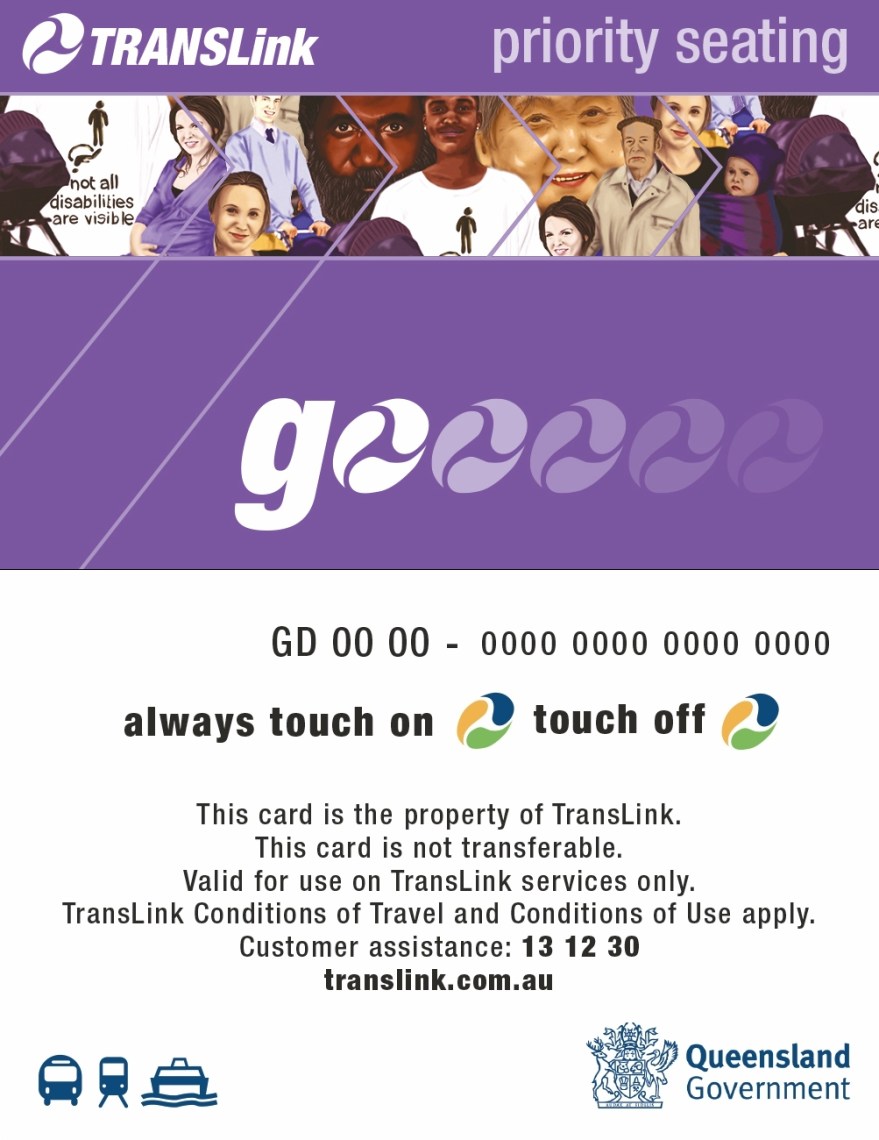
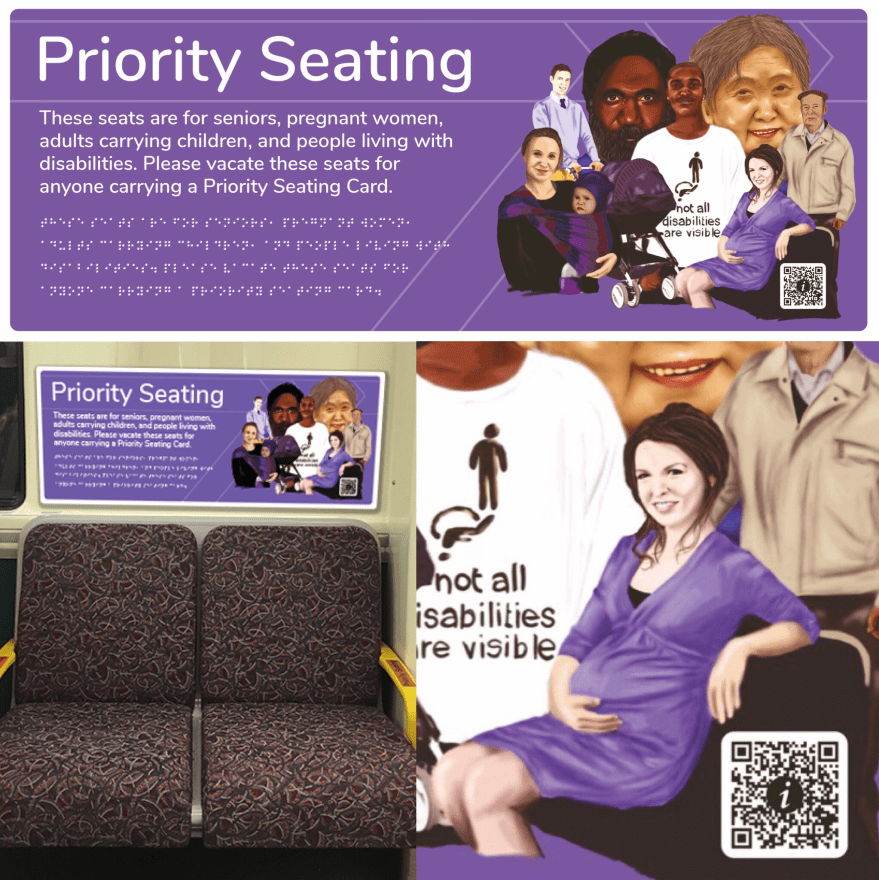
For the rebranding of TransLink’s pre-existing signage, I used a shade unto heliotrope as the colour is oft used in western literature as a means of representing change. The colour was also complimentary to TransLink’s blue, green and chrome yellow colour scheme. I enlarged the priority seating area signage and placed it directly above the seating, separating it from the emergency call buttons, etc, and included a QR code that when scanned opens up a webpage where the sign’s contents can be translated into many languages. This challenged the previous implementation of priority seating as a discriminatory construct and and improved upon sign values and frameworks.
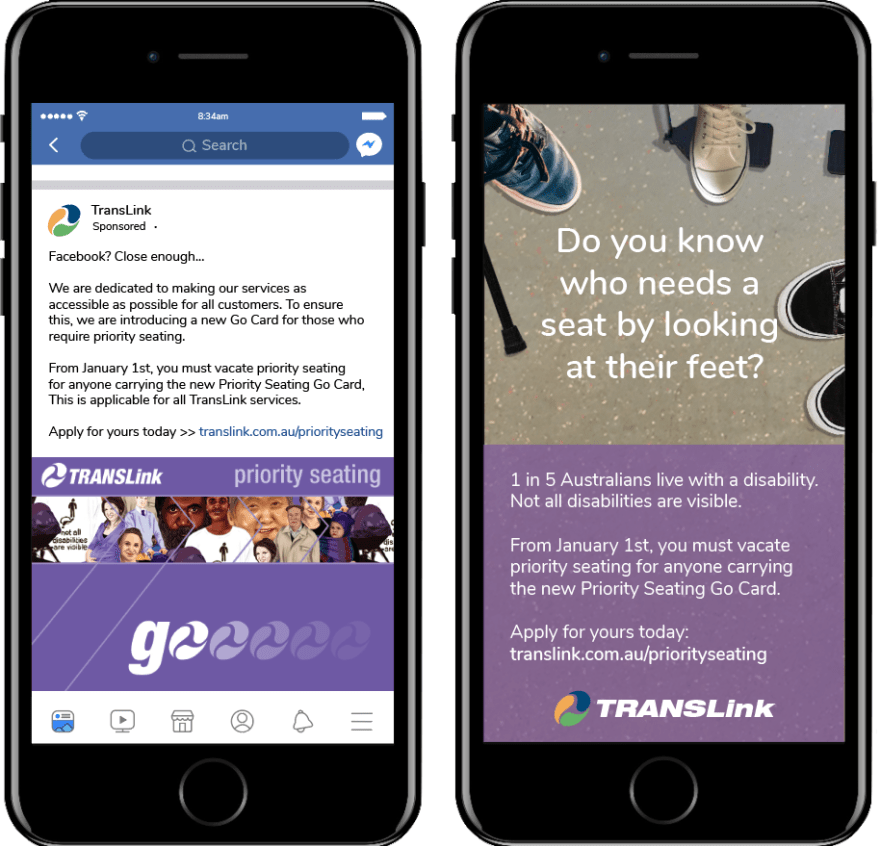
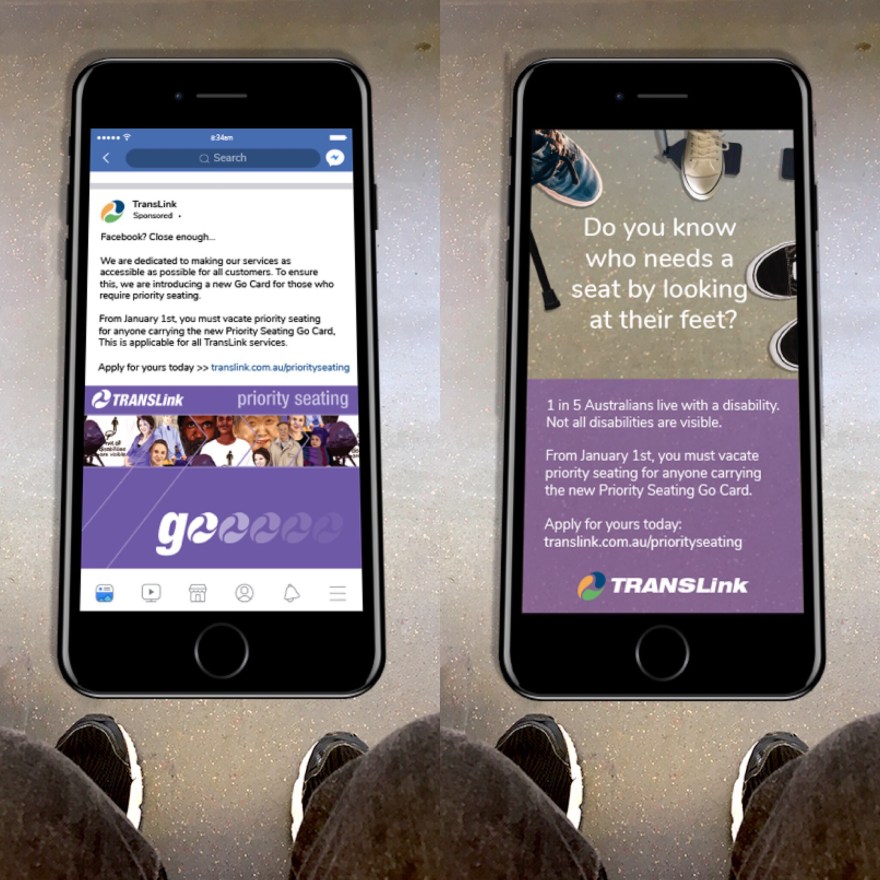
Through ethnographic study, it was most apparent that the majority of public transport users spent the journey in their phones. Thus advertising for the campaign was placed on the floor in front of patrons occupying priority seating, and the image of a phone was used to capture their attention. The imagery was made to look consistent with social media and augmented reality. These elements combined to create a visual language in which the expression of recoding the culture of priority seating, aiming to speak to all patrons to offer a new, improved perspective, invite a more inclusive discourse, and subvert historical attitudes towards othering.
 Tahnee Danielle Design